PERSONAL INFORMATION
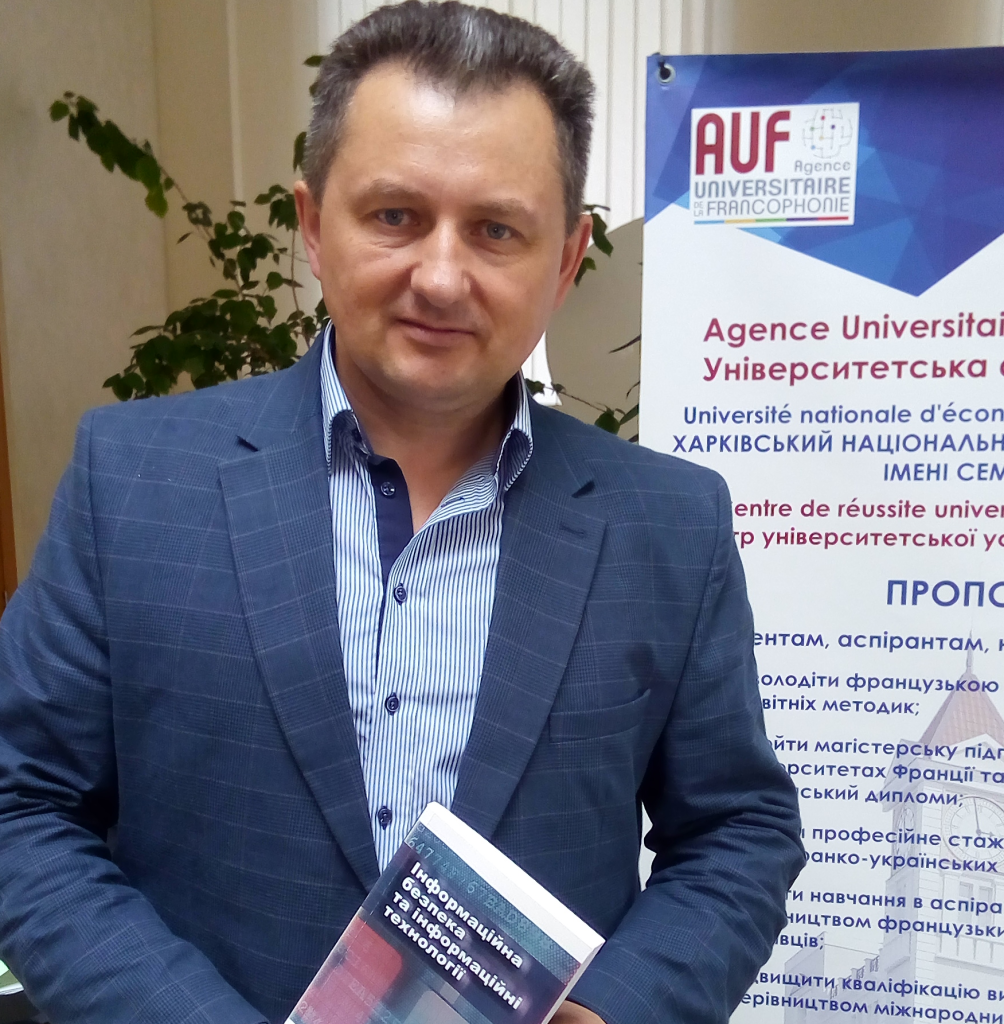
National Technical University “Kharkiv Polytechnic Institute”, Head of Cybersecurity Department, Educational and Scientific Institute of Computer Science and Information Technology
Kyrpychova str. 2, Kharkiv, 61002, Ukraine
380 95 360 6613 +380 95 360 6613
Serhii_Yevseiev@khpi.edu.ua
Sex Male | Date of birth 06/02/1969
WORK EXPERIENCE
| National Technical University “Kharkiv Polytechnic Institute”, Head of Cybersecurity Department, Educational and Scientific Institute of Computer Science and Information Technology |
| since 2022 |
| Organization of the educational process at the department, conducting scientific research on the construction of multi-contour security systems in socio-cyberphysical systems, forming a universal classifier of threats to critical infrastructure facilities, conducting research on the resistance of post-quantum algorithms, forming a fundamentally new technology for closing wireless channels in the post-quantum period. Responsible for the coordination of international projects on cybersecurity at the university. Participation in international grants: G-202202-68461: “Promotion of the Cyber Hygiene e-course at the National Technical University ’Kharkiv Polytechnic Institute’”; G-202301-69857: “Integration of new Cybersecurity course into the Curriculum of the National Technical University ’Kharkiv Polytechnic Institute‘”, United States Agency for International Development: “Cybersecurity of Critical Infrastructure of Ukraine”. |
| S. Kuznets Kharkiv National University of Economics, Head of the Department of Cybersecurity and Information Technologies |
| 2018-2021 |
| Organization of the educational process at the department, conducting scientific research on the construction of multi-contour security systems in socio-cyberphysical systems, forming a universal classifier of threats to critical infrastructure facilities, conducting research on the resistance of post-quantum algorithms, forming a fundamentally new technology for closing wireless channels in the post-quantum period. Conducting research within the framework of the grant “Protection of Critical Infrastructure Facilities of Ukraine” |
| S. Kuznets Kharkiv National University of Economics, Deputy Dean of the Faculty of Economic Informatics |
| 2014-2018 |
| Conducting research on the development of a methodology for building a security system for banking information resources. Developing a platform for a universal classifier of cyber threats to banking information, taking into account their characteristics – hybridity and synergy. Developing a synergetic threat model, an intruder model, post-quantum algorithms – McEliece and Niederreiter crypto-code constructions on EC, MEC and damaged codes. Forming a methodology for building intelligent security systems |
| S. Kuznets Kharkiv National University of Economics, Associate Professor, Department of Information Systems |
| 2007-2018 |
| Conducting research on universal hash functions, digital steganography methods, conducting classes on information security, computer systems and networks, computer systems engineering. Organization of the educational process at the Faculty of Information Technology. Guiding students at all-Ukrainian competitions in cybersecurity and data protection (first places from 2014 to 2017). Organization and formation of the Department of Cybersecurity and IT. Participation in scientific research with state and commercial funding: Development of methodological and model-information support for building an innovative university based on quality education and anti-corruption (State registration number 0120U102152); Models and methods of information protection in cyber-physical systems (under contract No. 376-46 dated 18 November 2021); Development of asymmetric encryption algorithms for mobile communication devices (under EU contract No. 449 dated 27 October 2016); Initiative topics: ‘Development of a concept for building a security system for critical infrastructure in the context of post-quantum cryptography’, ‘Methodology for modelling agent interaction in security systems’. |
| Kharkiv University of Air Forces, leading researcher at the research department of the Information and Computing Center |
| 2007 |
| Participation in scientific research: 1) Assessing the feasibility of the local telecommunications network of the Dnipro automated control system to ensure reliability, efficiency and information security when notifying about the emergency situation in the special automated control system recognition. 2) Development of an information protection subsystem in the telecommunications system of the Oreanda automation complex of the Air Defence Forces of the Armed Forces of Ukraine. Code name: ‘Password’. Final. State registration number 0101U000415. 3) Development of methods and software tools to improve the reliability and timeliness of data transmission in the telecommunications system of the automated control system of the Air Defence Forces of the Armed Forces of Ukraine, the Oreanda automation complex. Code name: ‘Algorithm’. Interim. State registration number 0101U000413. 4) Systems and means of troop and weapon control. Fundamentals of electronic warfare. Code name: ‘Tisha-P’. State registration number 0101U000412. 5) Assessment of the possibility of using the telecommunications network of the Dnipro automated control system to ensure reliability, efficiency and information security when reporting on the air situation in special-purpose automated control systems. Code name: ‘Integration – HUPS’. State registration number: 0101U000439. 6) Development of methods for improving the quality of military communications in the automated missile and artillery control system, code name: ‘Mriya’. State registration number: 0101U000414. 7) Development of electronic libraries and databases to ensure the initial and scientific process |
| Kharkiv University of Air Forces, postgraduate studies in the form of training |
| 2003-2006 |
| Research into the possibilities of using crypto-code constructions to ensure information security of data transmission in special communication systems. |
| Armed Forces of Ukraine, engineer of the training and commissioning team, deputy chief of the operational unit, deputy chief of staff, chief of the operational department |
| 1991-2002 |
| Carrying out combat duty in the 571st missile regiment of the 19th missile division. Service in the operational department of the 19th missile division (organization and verification of combat duty by the duty forces of the Strategic Missile Forces division), organization of the work of the headquarters in the missile brigades of the operational-tactical regiment. Organization of interaction with the departments and services of the division and brigade. Training at the operational-tactical level, study of the combat use of the operational-tactical regiment of the operational-tactical regiment in a general military operation, assessment of the combat capabilities of the enemy’s air attack weapons |
EDUCATION AND TRAINING
| Doctor of Technical Sciences in specialty 21.05.01 – Information Security of the State on the topic “Methodology of Construction of The Security System of Banking Information Resources” |
| – a concept for constructing a synergetic model of security threats to banking information resources has been proposed, the basis of which is a three-level model of strategic management of information technology security in the ABS – a synergetic model of security threats to the BIR has been developed, which allows improving the intruder model and establishing relationships between the elements and communication channels of the ABS, the BIR with threats, as well as achieving a synergetic effect – a classifier of security threats to the BIR has been developed, which allows classifying threats by security components, types of services and levels of the hierarchy of the infrastructure of automated banking systems – integrated mechanisms for ensuring confidentiality and integrity have been developed – hybrid crypto-code constructions with damaged codes based on the modified McEliece crypto-code system on modified algebraic geometric codes (National Aviation University) |
| PhD in Technical Sciences, specialty 20.02.12 “Military Cybernetics, Control Systems and Communications” |
| – McEliece crypto-code constructions on elliptic codes and their modifications have been developed – Proposals have been developed for hardware and software implementation of crypto-code constructions – Research has been conducted on the statistical security of McEliece crypto-code constructions (Kharkiv University of Air Forces) |
| Master of Military Management, Officer of Operational-Tactical Management |
| An analysis of the combat stagnation of OTL rbr in the zagal-Viysk operation was carried outAssessing the combat capabilities of the enemy’s attack capabilitiesAnalysis of methods for stagnating the capabilities of the enemy’s attackMethods to protect the RBR (rdn) OTL colony from the enemy’s homing attacks (Kharkiv Military University) |
| “Officer with higher military-special education, engineer-cybernetic,” Specialist diploma |
| – Research on the need for maintenance on the MTSA launchers has been conducted – Research on ways to increase the survivability of the MTSA launchers under operating conditions (Perm Higher Military Command-Engineering Red Banner School of Missile Forces named after Marshal of the Soviet Union V.I. Chuikov) |
| Certifications CISCO: |
| CCNA R&S: Introduction to Networks, CCNA R&S: Routing and Switching Essentials, CCNA R&S: Scaling Networks, CCNA R&S: Connecting Networks Network Security |
PERSONAL SKILLS
| Mother tongue(s) | Ukrainian, Russian | ||||
| Other language(s) | UNDERSTANDING | SPEAKING | WRITING | ||
| Listening | Reading | Spoken interaction | Spoken production | ||
| English | English B2 | English B2 | English B2 | English B2 | English B2 |
| Certificate of English language proficiency (level B225348, issued on 06/21/2019 by the municipal extracurricular educational institution “First Kyiv State Courses of Foreign Languages” | |||||
| Levels: A1/2: Basic user – B1/2: Independent user – C1/2 Proficient user Common European Framework of Reference for Languages | |||||
| Job-related skills | Coordinated (acted as a project manager) 3 different European projects: CRDF Global G-202301-69857 “Integration of new Cybersecurity course into the Curriculum of the National Technical University “Kharkiv Polytechnic Institute”, CRDF Global project “Promotion of the Cyber Hygiene E-learning”, USAID Project APS-CCI-001 “Cybersecurity of critical importance” infrastructure of Ukraine” As part of the USAID APS-CCI-001 project, since 2019, has been leading 1) the creation and launch of a cyber polygon, the formation of laboratories for the assessment and construction of intelligent security systems; 2) the creation of a framework for a universal classifier of cyber threats to critical infrastructure facilities (https://skl.khpi.edu.ua/login) 3) A concept for building a security system for the university’s corporate scientific and educational system was formed based on the use of post-quantum algorithms to provide privacy services. | ||||
ADDITIONAL INFORMATION
| Publications ORCID: https://orcid.org/0000-0003-1647-6444 1. Enhancement of productivity of random sequences generation for information protection systems / Eastern European journal of advanced technologies. – Kharkiv. – 2018. 4/9(94). P. 50-60. 2. Practical implementation of the Niederreiter modified crypto-code system on truncated elliptic codes / Eastern European journal of advanced technologies. – Kharkiv. – 2018. 6/4(96). P. 24-31. 3. Classifier of cyber threats to information resources of automated banking systems / Scientific and technical journal “Cybersecurity: education, science, technology”. – 2018. – No. 2. – P. 47–67. 4. Development of structural models of sustainability of investment projects in cybersecurity / Scientific and technical journal “Information Security”. vol. 24. No. 3. Kyiv. – 2018. – pp. 181 – 194. 5. Development of Niederreiter hybrid crypto-code structure on flawed codes / Eastern European journal of advanced technologies. – Kharkiv. – 2019. 1/9 (97). P. 27-37. 6. Development of a methodology for building a security information system in the corporate research and education system in the context of university autonomy / Eastern European journal of advanced technologies. – Kharkiv. – 2019. 3/9(99). P. 49–63. 7. Algorithm of information security risk assessment based on fuzzy-multiple approach / Modern information technologies. – Kharkiv. – 2019. Vol. 3, No. 2. P. 73–79. 8. Development the model of the antagonistic agents behavior under a cyber conflict / Eastern European journal of advanced technologies. – Kharkiv. – 2019. 4/9(100). P. 6–19. 9. Development of authentication codes of messages on the basis of UMAC with crypto-code McEliece’s scheme / International Journal of 3D printing technologies and digital industry 3:2 (2019). P.153–170. 10. Research of periodic properties of pseudo-accidental numbers generators, based on the use of excess block codes / International Journal of 3D printing technologies and digital industry 3:2 (2019). P.124–127. 11. Development of the interacting agents behavior scenario in the cyber security system / Eastern European journal of advanced technologies. – Kharkiv. – 2019. 5/9(101). P. 46–57. 12. Mathematical models of hybrid crypto code constructions on damaged codes / Modern information technologies. – Kharkiv. – 2019. Vol. 3, No. 3. P. 87–103. 13. Development of a scenario modeling of conflicts tools in a security system based on formal grammars / Eastern European journal of advanced technologies. – Kharkiv. – 2019. 6/9(102). P. 22–39. 14. Research of criteria of modified non-symmetric crypto-code construction of mceliece on extended elliptic codes / Science and Technology of the Air Force of the Armed Forces of Ukraine. – Kharkov. – 2019. No. 4(37). P. 80–92. 15. Methodology of modeling the behavior processes of antagonistic agents in security systems / Ukrainian Scientific Journal of Information Security, 2019, vol. 25, issue 3, pp. 150–161. 16. Improvement of project risk assessment methods of implementation of automated information components of non-commercial organizational and technical systems” / “EUREKA: Physical Sciences and Engineering”, № 1. – 2020. P. 48–55. 17. Development and analysis of game the theoretical models of security systems agents interaction / Eastern European journal of advanced technologies. – Kharkiv. – 2020. 2/4(104). P. 15–29. 18. Development of an advanced method of video information resource compression in navigation and traffic control systems / “EUREKA: Physical Sciences and Engineering”, № 5. – 2020. Р. 31–42. 19. Modification of the algorithm (OFM) S-box, which provides increasing crypto resistance in the post-quantum period / International Journal of Advanced Trends in Computer Science and Engineering. Volume 9, No.5, September – October 2020. P/ 8725–8729. 20. Development of methodological principles for the construction of a corporate information educational system of innovative-active University in the framework of anticorruption activities / Eastern-European Journal of Enterprise Technologies. 2020. 5/2(107). Р. 6–28. 21. Modeling the protection of personal data from trust and the amount of information on social networks / “EUREKA: Physical Sciences and Engineering”, № 1. – 2021. Р. 24–31. 22. Development of a method for constructing linguistic standards for multi-criteria assessment of honeypot efficiency / Eastern-European Journal of Enterprise Technologies. 2021. 1/2 (109). р. 14–23. 23. Development of an optimization method for measuring the doppler frequency of a bucket with account for the fluctuations of the initial phases of its radio pulses / Eastern-European Journal of Enterprise Technologies. 2/9 2021. (110). р. 6–15. 24. Structural model of a modified special-purpose system / Collection of scientific papers “Special telecommunication systems and information protection”. Publishing house of the Igor Sikorsky Kyiv Polytechnic Institute. Issue 1 (35), 2021. pp. 25–39. 25. Tokenization of educational assets based on blockchain technologies / Journal “ScienceRise: Pedagogical Education”. №3(42)2021. P.4–10. 26. Peculiarities of blockchain technology introduction in the field of healthcare: current situation and prospects / Information Processing Systems, 2021, Issue 1 (164), р. 33–43. 27. Methods of information systems protection / Advanced Information Systems. 2021. Vol. 5, No. 2, р. 131-135. 28. Development of conception for building a critical infrastructure facilities security system / Eastern-European Journal of Enterprise Technologies. 3/9 2021. (111). р. 63–83. 29. Development of a method for estimating the effect of ransformation of the normalized frequency mismatch function of a coherent bundle of radio pulses on the quality of radar frequency resolution / Eastern-European Journal of Enterprise Technologies. 4/4 2021. (112). р. 13–22. 30. Development of a protocol for a closed mobile internet channel based on post-quantum algorithms / Information Processing Systems. 2021. No. 3(166). Pp. 35-40. https://doi.org/10.30748/soi.2021.166.03. 31. Development of a comprehensive indicator of service quality based on post-quantum algorithms / Control, navigation and communication systems. Issue 3(65). Poltava: NU “PP”, 2021. P.82-88. 32. Analysis of information security threat assessment of the objects of information activity / International independent scientific journal. Poland. Vol. 1, №34, 2021, pp.33 – 39. 33. Development of a method for assessing the security of cyber-physical systems based on the Lotka–Volterra model / Eastern-European Journal of Enterprise Technologies. 2021. 5/9 (113). P. 30–47. 34. The method of discretization signals to minimize the fallibility of information recovery / International Journal of Communication Networks and Information Security (IJCNIS). Vol 13, No 3 (2021). рр340-348. 35. The methodology of automatical detection of digital illegal obtaining means of information / Scientific discussion (Praha, Czech Republic). VOL 1, No 62, p.16–22. 2021 36. Development of a method for assessing forecast of social impact in regional communities / Eastern-European Journal of Enterprise Technologies. 2021. 6/2 (114). P. 30–47. 37. Research of collision propeties of the modified UMAC algorithm on crypto-code constructions / “EUREKA: Physical Sciences and Engineering”, № 1. – 2022. Р. 34–44. 38. Development of a modification of the method for constructing energy-efficient sensor networks using static and dynamic sensors / Eastern-European Journal of Enterprise Technologies. 2022. 1/9 (115). P. 15–23. 39. Development of crypto code structures on LDPC-codes / Eastern-European Journal of Enterprise Technologies. 2022. 2/9 (116). P. 44–59. 40. Development of a method for determining the indicators of manipulation based on morphological synthesis / Eastern-European Journal of Enterprise Technologies. 2022. 3/9 (117). P. 22–35. 41. Development of a method for ensuring confidentiality and authenticity in wireless channels / Eastern-European Journal of Enterprise Technologies. 6/9 (120) 2022. P. 15–27. 42. Development of concepts for the cyber security metrics classification / Eastern-European Journal of Enterprise Technologies. 4/4 (118). 2022. P. 6–18. 43. Development of a hardware cryptosystem based on a random number generator with two types of entropy sources / Eastern-European Journal of Enterprise Technologies. 5/9 (119). 2022. P. 6–16. 44. Development of the concept for determining the level of critical business processes security / Eastern-European Journal of Enterprise Technologies. 2023. 1/9 (121). P. 21–40. 45. The concept of building security of the network with elements of the semiotic approach / ScienceRise, No. 1 (84), 2023, Р. 24–34. 46. Method of assessment of frequency resolution for aircraft / Eastern-European Journal of Enterprise Technologies. 2023. 2/9 (122). P. 34–45. 47. Development of an improved SSL/TLS protocol using post-quantum algorithms / Eastern-European Journal of Enterprise Technologies. 2023. 3/9 (123). P. 34–45. 48. Development of an errors correction method using perfect binary arrays / Eastern-European Journal of Enterprise Technologies. 2023. 4/9 (124). P. 45–53. 49. Development of a multi-loop security system of information interactions in socio-cyberphysical systems / Eastern-European Journal of Enterprise Technologies. 2023. 5/9 (125). P. 53–74. 50. Methods of information systems protection / Advanced Information Systems. 2023. Vol. 7, No. 4, Р.80-85. 51. Development of the synthesis method of the automated acceptance system in the management of information security channels / Eastern-European Journal of Enterprise Technologies. 2023. 6/9 (126). P. 39–49. 52. Synthesis of a model of social sanctions to ensure the stability of virtual communities in social networks in an antagonistic environment / Information Protection, vol. 25, no. 3, July-September 2023. P. 139–147. 53. Development of a method for synthesizing an information-analytical system for assessing the level of information transmission channels protection / Eastern-European Journal of Enterprise Technologies. 2024. 2/9 (128). P. 36–43. 54. Development of a model of the information and analytical system for making decisions on detecting failures of information transmission channels / Eastern-European Journal of Enterprise Technologies. 2024. 3/9 (129). P. 28–36. 55. Application of the innovative approach in the modernization of higher education institutions of the security service of Ukraine / Ukrainian Scientific Journal of Information Security. Vol. 30 No. 1 (2024). Р.179–189. 56. Sociocyberphysical system wireless air network topology synthesis model / Ukrainian Scientific Journal of Information Security. Vol. 30 No. 1 (2024). Р.51–57. 57. SSL/TLS protocol on post-quantum algorithms / Ukrainian Scientific Journal of Information Security. Vol. 30 No. 1 (2024). Р.150–156. 58. Model basis for cybersecurity of socio-cyberphysical systems / Baltic journal of modern computing. – 2024. – Т. 12. – №. 2. – С. 125-149. 59. Development of functionality principles for the automated data transmission system through wireless communication channels to ensure information protection / Eastern-European Journal of Enterprise Technologies, 2024, 4(9(130)), pp. 18–33. 60. Development of a method for protecting information resources in a corporate network by segmenting traffic / Eastern-European Journal of Enterprise Technologies, 2024,5(9(131)), pp. 63–78. 61. SSL/TLS protocol on post-quantum algorithms / Ukrainian Scientific Journal of Information Security, 2024, vol. 30, issue 1, pp. 150-156. 62. Sociocyberphysical system wireless air network topology synthesis model / ISSN 2225-5036 (Print), ISSN 2411-071X (Online) http://infosecurity.nau.edu.ua; http://jrnl.nau.edu.ua/index.php/Infosecurity 63. Evaluation of the properties of crypto-code structures based on LDPC codes / Ukrainian Scientific Journal of Information Security, 2024, vol. 30, issue 2, pp. 313-323. Presentations Conferences Seminars 1. Algorithm of information security risk assessment based on fuzzy-multiple approach / ITSec: Information Technology Security: IX International Scientific and Technical Conference, March 22-27, 2019 – Kyiv: NAU, 2019. – 59 p. – P.6–7. 2. Cyber threats classifier ofautomated banking systems information resources / International Scientific and Practical Conference “Application of Information Technologies in the Training and Activities of Law Enforcement Forces”, March 15, 2019, –X: KhNURE, 2019, 155 p., – P. 85–87. 3. Simulation of the reflective behavior of antagonistic agents of cyber conflict / “Information protection and information systems security 2019”, May 30–31, 2019, Lviv, Ukraine, р.13–14. 4. Niederreiter hybrid crypto-code structure on flawed codes / “Information protection and information systems security 2019”, May 30–31, 2019, Lviv, Ukraine, р. 88–89. 5. Development of authentication codes of messages on the basis of UMAC with crypto-code mceliece’s scheme on elliptical codes / “Information protection and information systems security 2019”, May 30–31, 2019, Lviv, Ukraine, р.86–87. 6. Banking security synergetic models / 4th International Congress on 3D Printing (Additive Manufacturing) Technologies and Digital Industry 2019 11-14 APRIL 2019, р. 791–808. 7. Developing a model of efficiency of investment in the security of banking information in ABS / Materials of the International Scientific and Practical Conference “Economic Development and the Legacy of Semyon Kuznets”: abstracts of reports, May 30-31, 2019 – Kh.: Semyon Kuznets KhNEU, 2019. – 442 p., P.315–316. 8. Methodology for Building A Security System for Banking Information Resources / Symposium on Proceedings&Abstracts Book of the International Data Science & Engineering (IDSES’19), Karabük University Publishing, May 2–3, 2019, p.16–17. 9. Analysis of the security status of blockchain projects on the Ukrainian services market / International Scientific and Practical Conference “Intelligent Systems and Information Technologies” August 19–24, 2019, Odessa, pp. 62–64. 10. Simulation modeling of investment distribution in cybersecurity systems / International scientific and practical conference “Intelligent systems and information technologies” August 19-24, 2019, Odessa, pp. 144-145. 11. Use of lossy codes in Niederreiter’s crypto-code construction / International Scientific and Practical Conference “Intelligent Systems and Information Technologies” August 19 – 24, 2019, Odessa, pp. 244–146. 12. Niederreiter’s hybrid crypto-code construction on defective codes / 1st International Conference: Modern Information, Measurement and Control Systems: Problems and Perspectives (MIMCS’2019), 01-02 July, Baku, AZERBAIJAN, p. 75. 13. 2FA on hybrid crypto code constructions on damaged codes / Current issues of ensuring the service and combat activities of the security and defense sector forces: materials of the regional round table (Kharkiv, April 24, 2020) Issue 4. / editors: E.O. Melenti, I.V. Yevtushenko, O.A. Garbuzov, V.O. Ponomarev – Kh.: FOP Brovin O.V., 2020. – 312 p., pp. 246–251. 14. Modeling of scenarios of behavior of antagonistic agents of security systems / Current issues of ensuring cybersecurity and information protection: Materials of the VI International Scientific and Practical Conference, February 19-22, 2020 / Editors: I.I. Tymoshenko and others – Kyiv: Publishing House of the European University, 2020. – 112 p. – P.68–80. 15. Using the Flawed Codes In Niederreiter Crypto-Code Structure / Short Paper Proceedings of the 1st International Conference on Intellectual Systems and Information Technologies (ISIT 2019), Odessa, Ukraine, August 19–24, 2019. P. 17–19. 16. Development of Methods for Improving Crypto Transformations in the Block-Symmetric Code / 5th IEEE International Symposium on Smart and Wireless Systems Within the INTERNATIONAL CONFERENCES ON INTELLIGENT DATA ACQUISITION AND ADVANCED COMPUTING SYSTEMS. 17–18 September 2020. P.130–138. 17. Perspective national communication system for cyber management of critical facilities / Scientific Collection «InterConf», (39): with the Proceedings of the 8th International Scientific and Practical Conference “Science and Practice: Implementation to Modern Society” (December 26-28, 2020). Manchester, Great Britain: Peal Press Ltd., 2020. 1851 p. 18. The new method for detecting signals of means of covert obtaining information / 2020 IEEE 2nd International Conference on Advanced Trends in Information 25.11-27.11. 2020 Kyiv. р.176-181. 19. Security Analysis Models for Multimedia Information Resources in Social Networks / Cybersecurity Providing in Information and Telecommunication Systems, January 28, 2021, Kyiv, Ukraine. Р. 60–67. 20. Cybersecurity model based on the Lotka-Volterra model / Information protection and information systems security: materials of the VIII International Scientific and Technical Conference – Lviv: Lviv Polytechnic Publishing House, 2021. – pp. 93–94. 21. Safety of LTE technologies based on post-quantum algorithms / Scientific Conference “SCIENTIFIC SUMMARY OF 2021”. Collection of scientific papers. – Kharkiv, Kh.: TECHNOLOGICAL CENTER, 2021. – 65 p. 22. Development of a method for detecting deviations in the nature of traffic from the elements of the communication network / International Scientific And Practical Conference “Information Security And Information Technologies”: Conference Proceedings. Kharkiv – Odesa : Simon Kuznets Kharkiv National University of Economics, 2021. 298 p., Р. 8–17. 23. Model of the system for special purpose of critical infrastructure objects / International Scientific And Practical Conference “Information Security And Information Technologies”: Conference Proceedings. Kharkiv – Odesa : Simon Kuznets Kharkiv National University of Economics, 2021. 298 p., Р. 108–117. 24. Detection of intrusion attacks using neural networks / International Scientific And Practical Conference “Information Security And Information Technologies”: Conference Proceedings. Kharkiv – Odesa : Simon Kuznets Kharkiv National University of Economics, 2021. 298 p., Р. 117–125. 25. Critical points of information influence in social networks / International Scientific And Practical Conference “Information Security And Information Technologies”: Conference Proceedings. Kharkiv – Odesa : Simon Kuznets Kharkiv National University of Economics, 2021. 298 p., Р. 132–138. 26. Evaluation of cryptographic strength and energy intensity of design of modified crypto-code structure of McEliece with modified elliptic codes / International Scientific And Practical Conference “Information Security And Information Technologies”: Conference Proceedings. Kharkiv – Odesa : Simon Kuznets Kharkiv National University of Economics, 2021. 298 p., Р. 144–158. 27. Cyber terrorism as an object of modeling / International Scientific And Practical Conference “Information Security And Information Technologies”: Conference Proceedings. Kharkiv – Odesa : Simon Kuznets Kharkiv National University of Economics, 2021. 298 p., Р. 215–222. 28. Simulation model of blockchain sytem in the higher education / International Scientific And Practical Conference “Information Security And Information Technologies”: Conference Proceedings. Kharkiv – Odesa : Simon Kuznets Kharkiv National University of Economics, 2021. 298 p., Р. 244–249. 29. Concept of forming cyber-physical systems / XI Scientific and Practical Conference “Mathematics, Information Technologies, Education”, Lutsk–2022, June 3–5, 2022, pp. 68–69. 30. Pseudo-random number generator based on m-codes / XI Scientific and Practical Conference “Mathematics, Information Technologies, Education”, Lutsk–2022, June 3–5, 2022, pp. 70–71. 31. Checking for collision of hash codes generated using the UMAC algorithm on crypto-code constructions / XI Scientific and Practical Conference “Mathematics, Information Technologies, Education”, Lutsk–2022, June 3–5, 2022, pp. 66–67. 32. Socio-Cyber-Physical Systems Security Concept / 4th International Congress on Human-Computer Interaction, Optimization and Robotic Applications. June 9-11, 2022, Ankara, Turkey 33. Measuring Signals Synthesis Method on the Basis of Triangular Time-Pulse Modulation for Control of Radiotechnic Systems Technical Condition. Concept / 4th International Congress on Human-Computer Interaction, Optimization and Robotic Applications. June 9-11, 2022, Ankara, Turkey 34. Solving the Problem of Convergence of the Results of Analog Signals Conversion in the Process of Aircraft Control / 2022 IEEE Third International Conference on SYSTEM ANALYSIS & INTELLIGENT COMPUTING (SAIC), 04-07 Oktober, Kyiv, Ukraine. p. 118-124. 35. METODY OCHRONY INFORMACJI W SYSTEMACH CYBER-FIZYCZNYCH / XII CONFERENCE “ENGINEER OF XXI CENTURY”. “PROCESSING, TRANSMISSION AND SECURITY OF INFORMATION – 2022”. p.158-171. 36. An Improved Method of Detection and Localization of Signals in the Digital Range / 2022 IEEE 4th International Conference on Advanced Trends in Information Theory (ATIT), 15-17 December 2022, Kyiv, Ukraine, 2022. рр.130-132. 37. Implementation of Information and Communication Technologies in the Educational Process / HORA 2023 – 2023 5th International Congress on Human-Computer Interaction, Optimization and Robotic Applications, Proceedings, 2023. 38. Phase-Modulated Signals Synthesis Method to Control Information Transmission Channels / 2023 IEEE 4th KhPI Week on Advanced Technology (KhPIWeek). 39. Method for Assessing Meter Error Characteristics of Random Signals / 2023 7th International Symposium on Multidisciplinary Studies and Innovative Technologies (ISMSIT). 40. Development of a Sociocyberphysical Systems Cyber Threats Classifier / 2023 7th International Symposium on Multidisciplinary Studies and Innovative Technologies (ISMSIT). 41. Detecting Deepfake Modifications of Biometric Images using Neural Networks / CPITS-2024: Cybersecurity Providing in Information and Telecommunication Systems, February 28, 2024, Kyiv, Ukraine. P.391–397 42. Entropy Method for Assessing the Strength of Encryption Algorithms / 979-8-3503-9463-4/24/$31.00 ©2024 IEEE2024 International Congress on Human-Computer Interaction, Optimization and Robotic Applications (HORA). Projects Project commissioned by the state: “Development of methodological and model-information support for the construction of an innovative-type university based on the quality of education and combating corruption (State registration number: 0120U102152), responsible executor all-Ukrainian, from 01.01.2020 to 31.12.2021 CRDF Global G-202301-69857 “Integration of new Cybersecurity course into the Curriculum of the National Technical University “Kharkiv Polytechnic Institute” CRDF Global project “Promotion of the Cyber Hygiene E-learning” USAID Project APS-CCI-001 “Cybersecurity of Critical Infrastructure of Ukraine”, 1.04.24– 31 March 2024 Memberships Member of the public organization “Eastern European Scientific Society”, certificate ES No. 053 |
